

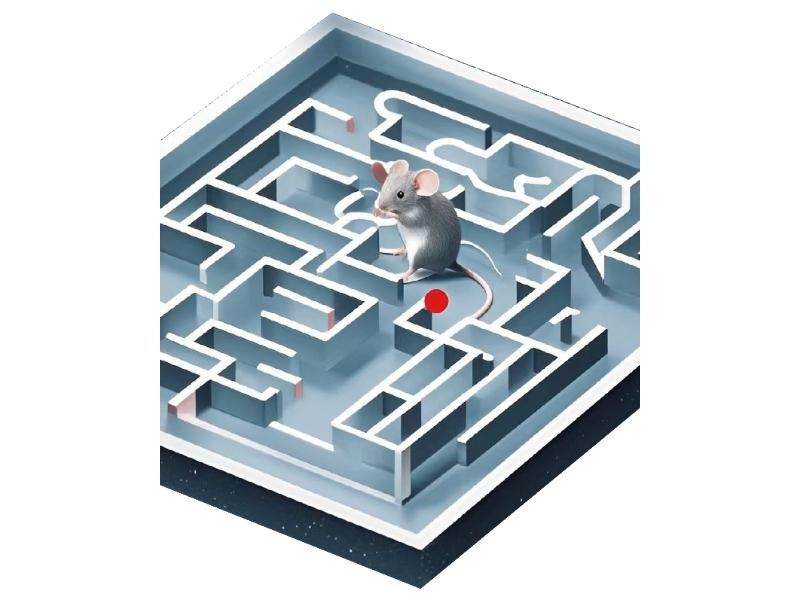
Manual behavioral scoring and rodent tracking software can address the same research question through very different workflows. Manual scoring depends on a researcher observing recordings or live behavior and recording predefined events.
Automated tracking uses video and detection algorithms to capture movement, position, trajectories, and selected behavioral events. The difference affects how data are collected, reviewed, and organized across an experiment.
Begin With Observation and Recording
Manual scoring generally requires the researcher to watch the animal and record behaviors according to a defined scoring scheme. The workflow may involve live observation, video review, timing events, and later transferring observations into a spreadsheet or analysis file.
A software-based workflow starts with video acquisition and experiment configuration. SANS-AI Video Tracking Software supports multiple camera acquisition experiments and includes controls for recording start time, duration, recording count, and interval time.
These settings allow video collection to be organized around repeated trials, animal replacement, and maze cleaning.
Change How Movement Is Captured
With manual scoring, locomotion-related information depends on what the observer records and how the scoring rules are applied. A researcher may need to note entries into specific zones, movement duration, or other events while watching the animal.
Rodent tracking software can convert video into structured trajectory information. SANS-AI identifies the animal’s full contour as well as the nose, body center, and tail base through deep-learning-based key-point recognition. The software can then generate trajectory and activity information that supports behavioral analysis.
Reduce Repeated Visual Checking
Repeated video review can become time-intensive when experiments involve many animals, multiple sessions, or long recordings. Manual scoring also requires the observer to maintain attention to the defined behaviors throughout the review process.
Automated analysis changes this stage by processing recorded videos according to configured detection and analysis settings. SANS-AI offers five detection methods, including automatic setting, grayscale gradient, static background, dynamic background, and difference detection.
Erosion, dilation, and area screening can also be used to fine-tune animal contours.
Standardize Areas and Events
Manual scoring can use predefined zones, but the researcher has to apply those boundaries while observing each recording. This becomes more complex when several areas or repeated conditions are involved.
The software provides tools for independently drawing observation and analysis areas, loading conventional maze paradigms, and applying the same area settings to multiple videos. Its experiment-control functions also include time events, area detection, multi-area settings, duration rules, and conditional requirements.
Organize Data Before Interpretation
Manual scoring often requires researchers to combine observations from different recordings into a common dataset before analysis. Labels, timestamps, animal identifiers, and experimental groups need to remain consistent so that observations can be compared later.
Automated tracking can place movement measurements and event records into a more structured workflow from the beginning. This is particularly useful when multiple sessions generate large numbers of video files.
Establishing clear naming rules, experiment settings, and analysis categories before processing can make later review easier and reduce confusion between animals or experimental conditions.
Add Quantitative Outputs to the Workflow
Manual observation can produce useful behavioral scores, but the resulting dataset depends on the variables selected for recording. Automated tracking can generate several visual and quantitative representations from the same video.
SANS-AI provides trajectory visualization and heatmap visualization based on location, time, velocity, and acceleration. Its analysis module allows researchers to select technical indicators for statistical summaries.
The software also supports trajectory post-processing through smoothing and maximum-movement-distance correction when recorded trajectories contain fragments or detection artifacts.
Keep Manual Scoring as Part of the Process
Automation does not remove every observational task. Some behaviors may require researcher judgment or may not be represented by movement trajectories alone. For these situations, the software includes manual recording of additional behaviors through 26 keyboard-mapped shortcuts.
This creates a workflow in which automated movement tracking and manual behavioral annotation can be used together. Researchers can use detected trajectories for locomotion-related measurements while adding observations that require direct behavioral interpretation.
Manual review can also serve as a quality-control step. Checking selected recordings against automatically generated trajectories may help researchers identify unusual detections, confirm that defined areas are functioning as intended, and decide whether certain behavioral events need additional annotation.
Choose the Workflow Around the Study
The appropriate workflow depends on the behavior being measured, the number and duration of recordings, and the type of data required. Manual scoring can remain useful for clearly defined behaviors that require visual interpretation.
Automated analysis becomes more relevant when researchers need repeatable trajectory measurements, multiple areas, large video datasets, or detailed movement parameters.
Within its behavioral research portfolio, BioMed Easy offers SANS-AI Video Tracking Software for rodents and other small animals, with applications including learning and memory, anxiety and depression, social interaction, circadian activity, and drug dependence.
The software supports both real-time tracking and offline multi-threaded batch processing.
For laboratories reviewing their behavioral analysis workflow, BioMed Easy can provide a video tracking setup around the required maze, species, recording method, and analysis needs. Contact the team to discuss your application and determine how automated tracking and manual scoring can fit into the same research workflow.
