

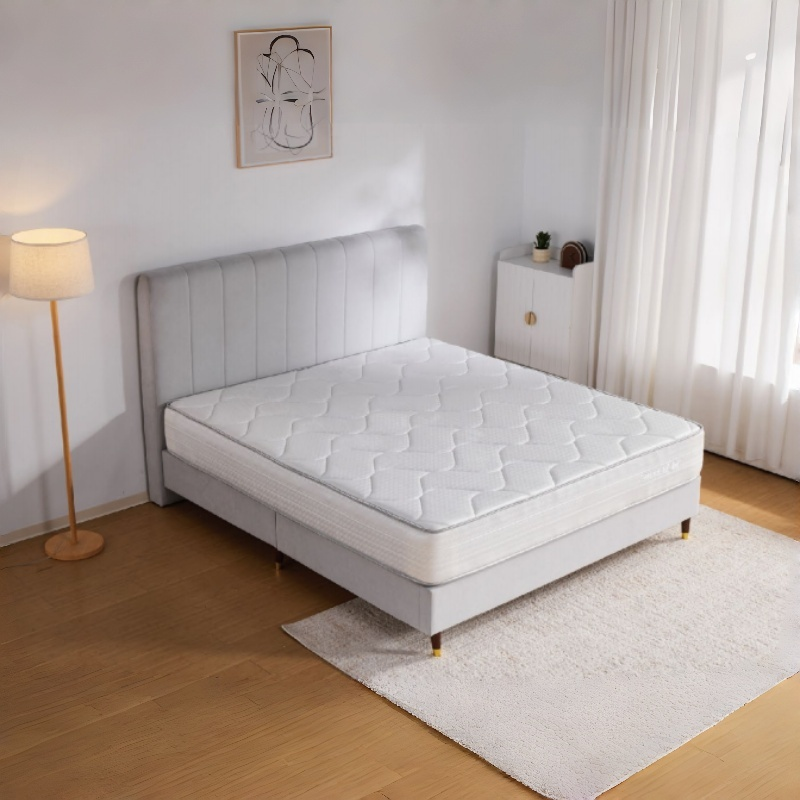
Retail growth often starts with a narrow set of reliable mattresses, then becomes more complicated as customers and sales channels multiply. A store may add online orders, a private-label range, or hotel customers without wanting a separate supply chain for every new product. As the offer expands across channels, consistent specifications and reliable replenishment make a mattress supplier valuable to the retailer.
Growth is not simply more units of the original model. New segments may prefer different support systems, comfort layers, sizes, or delivery formats. A supplier with a broad range can give the retailer room to test those differences before committing inventory across every location.
Extend the Range Without Blurring It
An entry-level spring mattress, a memory-foam option, and a hybrid construction can serve different needs, provided the distinctions are real and clearly described. A compressed mattress may be chosen for delivery logistics rather than for a particular feel. Hotel mattresses may require a separate standard because purchasing and replacement cycles differ from consumer retail. A growing assortment should make each addition understandable to staff and shoppers.
Suisin Furniture extends this mix to compressed, hotel, and customized mattresses. That range gives a retailer a basis for testing several positions through one mattress supplier. The models still need separate samples and specifications; a broad catalogue has value only when the retailer can identify which product serves each segment and reorder it consistently.
Price positioning should be supported by material and construction differences the retailer can explain. Adding a higher-priced mattress without a distinct customer benefit may only split sales among similar products. The buyer can study returns, customer questions, and sell-through by model before expanding the range. Those observations reveal where another option may fill a gap.
Use Private Label to Define a Distinct Offer
A retailer first needs to define the customer gap its private label will fill. Size, firmness, materials, design, branding, and packaging can be tailored to that purpose. Only customer-relevant changes differentiate the range. Hotel and consumer models may share a supplier but need distinct briefs, samples, and descriptions. The label should reflect a stable specification rather than just a new name on an existing bed.
Suisin Furniture describes OEM and ODM services, samples, bulk supply, and international shipping. For a retailer moving from resale to private label, the sample stage can establish a physical reference before scale increases. Packaging approval is part of that step, especially if the product will be sold online or delivered through a distribution network.
More channels also increase the importance of version control. If a model changes cover fabric or height, store displays, website descriptions, and warehouse labels must all refer to the correct version. A wholesale relationship supports growth when updates travel through those systems without creating conflicting product information.
Connect the Mattress Range to the Wider Store
Retailers often sell more than the mattress itself. Beds, sofas, and matching furniture can support a broader bedroom or home collection, but visual coordination and dimensions need attention. Suisin Furniture also supplies these furniture categories, which may let a buyer discuss related products with fewer partners. That is a sourcing convenience rather than proof that every item belongs in the same retail program.
Expansion can be staged. A retailer might first test one additional mattress construction, then introduce private-label packaging, and later add coordinated furniture. At each stage, sales data and customer feedback should determine whether the next product is warranted. Inventory growth without demand evidence can weaken the very business it is meant to build.
For a search such as mattress wholesale, the useful question is what support continues after the first purchase. Replenishment timing, agreed specifications, mixed product orders, and shipping information matter as volumes rise. A supplier able to manage those details gives the retailer a steadier base for expansion.
The pace and sequence of retail expansion matters. Adding many mattress sizes at once can fragment demand and complicate forecasting. A carefully staged launch can reveal whether shoppers distinguish models and whether replenishment works at volume. The supplier can then support proven products before a larger rollout.
Stores may also need information that travels with every reorder: current photos, material descriptions, packed sizes, and approved changes. If the product page shows an old cover while the new batch uses another, customers can be confused even when the mattress is structurally sound. Retail growth depends partly on keeping that information synchronized across buying, warehouse, and sales teams.
A supplier’s ability to combine mattress and furniture categories can simplify conversations, but category breadth should be evaluated against actual sales. A coordinated bed frame may increase the value of a mattress display; an unrelated sofa may require a different buying rationale. Each addition should earn its place in the store’s plan.
In mattress wholesale, retail growth becomes easier to sustain when each added product has a customer role, a tested specification, and a repeatable supply path. Wholesale breadth can open opportunities across price points and categories. Range expansion remains useful only while a mattress supplier can identify each item and reliably deliver it on the agreed schedule.
