

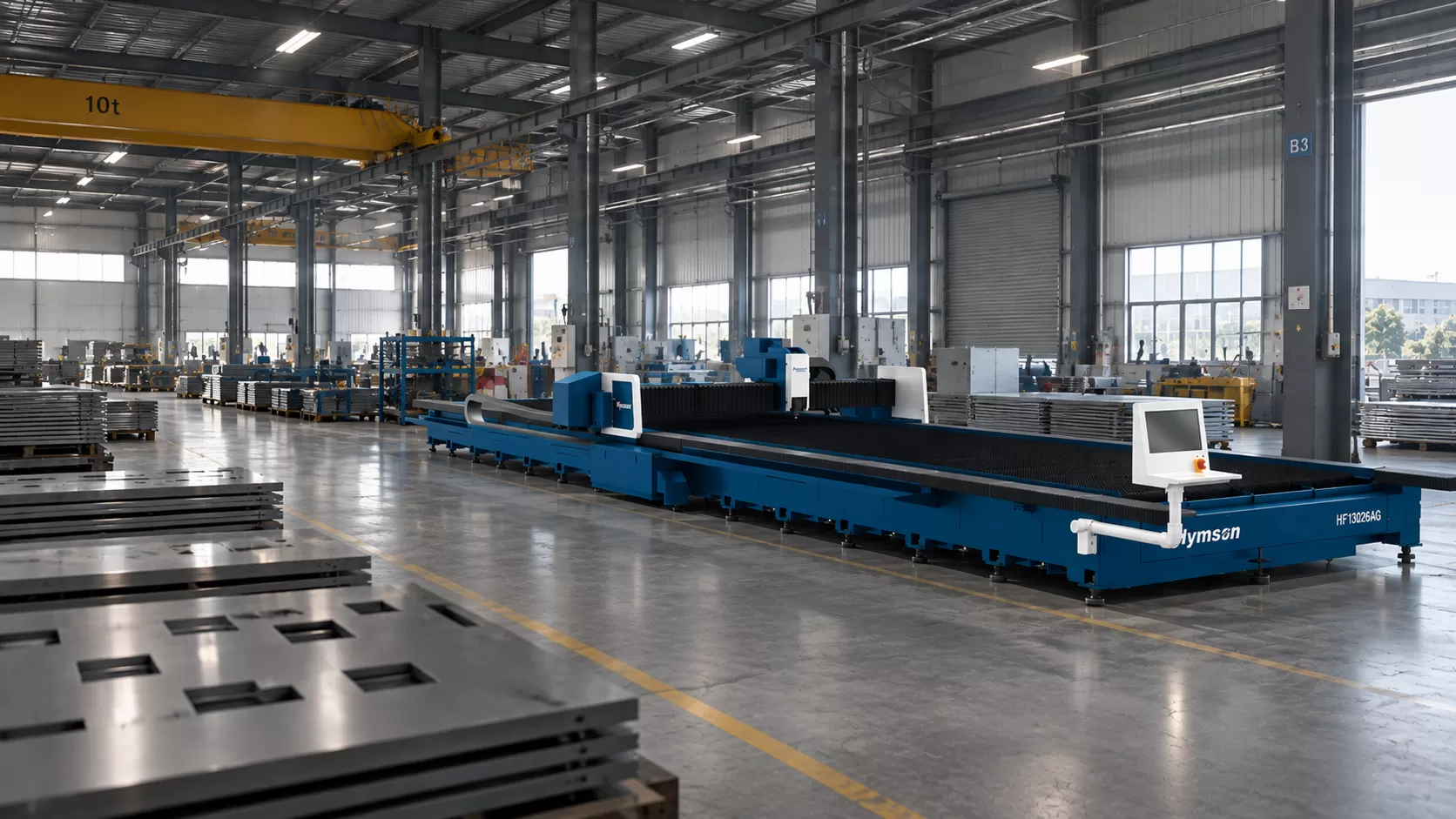
Heavy fabrication depends on more than cutting power. Oversized plates, demanding thickness ranges, complex contours, and strict handling requirements all influence how reliably a workshop can turn raw steel into usable components. Selecting a steel plate laser cutting machine calls for a close look at the actual production mix, from the dimensions of incoming sheets to the space required for unloading finished parts.
Equipment that suits the factory’s material flow can help reduce unnecessary movement, improve scheduling, and make heavy-plate processing more predictable. Hymson Laser Machinery develops industrial laser processing equipment for manufacturers working with demanding metal fabrication requirements.
Define Plate Dimensions and Cutting Requirements
Plate size should be assessed through real job records rather than the largest part produced in the past. Fabricators need to identify typical sheet dimensions, maximum length and width, thickness distribution, and the proportion of jobs that use full plates. Oversized capacity may be useful for structural components, machinery bases, and industrial enclosures, but it can also consume valuable floor space. Reviewing several months of orders helps determine whether the required working area reflects routine production or only occasional exceptions.
Material thickness and grade influence the cutting process as much as external dimensions. Carbon steel plates of different thicknesses may require different laser settings, cutting speeds, and assist-gas conditions, while surface scale or material inconsistencies can affect edge quality. A steel plate laser cutting machine should be evaluated against the combination of grades, thicknesses, contour complexity, and tolerances found in actual orders. Test cuts on representative material can reveal whether the intended configuration delivers acceptable edges without excessive secondary finishing.
Part geometry also determines how effectively a plate can be processed. Large structural components may contain long straight edges, small openings, narrow slots, and intricate internal contours, each with different cutting demands. Nesting software can arrange multiple components within one sheet, but tight spacing must account for heat effects, part stability, and the risk of small pieces shifting during cutting. Reviewing both material utilization and finished-part quality gives production planners a more realistic picture than comparing nominal cutting speed alone.
Plan Material Handling for Heavy Workpieces
Moving heavy steel plates can become a major constraint if lifting equipment, storage positions, and machine access are not coordinated. Depending on plate mass and dimensions, a workshop may use overhead cranes, forklifts, loading platforms, or automated transfer systems. The route from raw-material storage to the cutting bed should provide sufficient clearance for the plate and lifting equipment. Poor access can create delays even when the cutting process itself is fast.
Support and positioning arrangements deserve equal attention. Long or heavy plates must sit securely on the machine bed, with support points that accommodate their weight without obstructing the cutting path. Operators need a clear procedure for aligning the plate, checking its position, and removing finished components and scrap. Safe handling practices become particularly important when narrow remnants or separated parts can move unexpectedly after surrounding material has been cut.
Factory layout affects material movement throughout the shift. Raw plates, finished parts, scrap bins, and inspection areas should have designated positions to limit congestion and avoid unnecessary transfers. The footprint of large format laser cutting machines includes more than the cutting bed: service access, electrical cabinets, extraction equipment, and loading zones also require space. A layout review before installation can identify bottlenecks and help prevent later changes that disrupt production.
Evaluate Motion Performance and Operating Conditions
Heavy fabrication often combines large work envelopes with intricate cutting paths, making motion performance an important consideration. Acceleration, positioning behavior, machine rigidity, and control response influence how the system handles frequent changes in direction. High acceleration may shorten movement time on suitable geometries, but its practical effect depends on the cutting path, part layout, and operating parameters. Manufacturers should examine representative jobs rather than assuming that one performance figure predicts output across every application.
The HF-AG platform is designed for large, long, thick, and heavy plates, with stable acceleration of up to 1.5 g. This specification provides one reference point when assessing motion performance, but it should be considered alongside plate dimensions, cutting requirements, and the factory’s daily production schedule. A production trial can help determine how the machine handles the contours and material thicknesses most common in the workshop, while also revealing any need for changes to loading procedures or operator training.
Operating requirements extend beyond the machine’s cutting cycle. Power availability, assist-gas supply, fume extraction, consumables, preventive maintenance, and staff training all influence running costs and equipment availability. For large format laser cutting machines, a realistic evaluation should include installation conditions and the resources needed to keep the system operating consistently. Maintenance access and spare-parts arrangements also matter because a prolonged interruption can affect multiple fabrication orders, especially where heavy plates pass through a tightly scheduled production line.
Conclusion
Reliable heavy-plate processing begins with a clear understanding of the workpieces, not simply a comparison of machine specifications. Plate dimensions establish the required working envelope; material-handling plans determine how safely and efficiently sheets move through the factory; and operating conditions shape long-term productivity.
A steel plate laser cutting machine should be assessed through representative jobs and the full production route, including loading, cutting, inspection, and maintenance. Hymson Laser Machinery offers industrial solutions such as the HF-AG for large-plate applications, while a careful review of capacity, motion performance, and workshop requirements helps manufacturers select equipment suited to their actual fabrication needs.
