

Specialized electric vehicle sectors reward manufacturers that understand more than passenger-car design. Logistics vehicles, campus shuttles, electric trucks, sightseeing cars, and converted vehicles all require practical engineering, cost control, component integration, and manufacturing discipline.
In this environment, Chinese EV manufacturers can compete when they connect automotive manufacturing depth with real commercial use cases. Wuling Motors provides a useful example because its business covers automotive components, power systems, commercial vehicles, and cooperation with customers with tailored project requirements.
Its experience across several production bases and product categories shows how specialized vehicle programs depend on supply chain strength as much as styling or brand visibility. The advantage is not created by low cost alone. Commercial customers expect a supplier to manage quality, compliance, delivery, customization, and aftersales support. In specialized sectors, automotive manufacturing capability must be deep enough to support long product life cycles.
Manufacturing Depth Behind Specialized Platforms
Automotive manufacturing for specialized sectors begins with scalable parts supply. Vehicle platforms need body structures, chassis systems, power systems, electrical components, and final assembly processes that can be repeated consistently. Chinese EV manufacturers with component experience can reduce program risk because they understand how many subsystems interact. Wuling Motors has described businesses involving automotive components, power systems, and commercial vehicles.
That range is relevant for customers seeking more than a finished vehicle. specialized project partners often need design support, production coordination, and component matching for specific routes, payloads, or service environments. Specialized vehicles also require cost discipline. A delivery van, golf cart, or campus shuttle must meet operational needs without unnecessary complexity.
Automotive manufacturing strength helps balance specification, material choice, tooling, assembly efficiency, and service requirements. For commercial customers, the competitive advantage is practical. A manufacturer that can manage body, powertrain, chassis, and electrical systems is better positioned to adjust a platform for different applications while maintaining production consistency. Production base layout can also strengthen customer confidence.
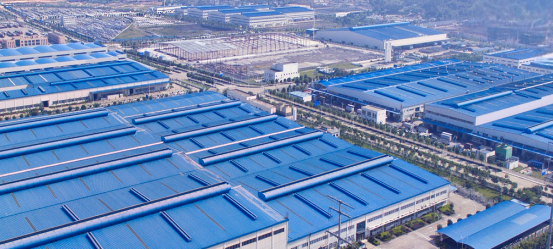
Multiple manufacturing locations, mature supplier relationships, and experience with different vehicle categories give Chinese EV manufacturers more room to manage capacity, regional requirements, and delivery schedules. Wuling Motors’ background in components and power systems is important because specialized EV programs often depend on parts beyond the final vehicle body. Motors, controllers, chassis parts, welded assemblies, and electrical systems all affect reliability in the field.
Supply Chain Integration and Engineering Flexibility
Chinese EV manufacturers often operate within mature supplier networks for batteries, motors, controllers, stamping, welding, electronics, and vehicle assembly. This ecosystem can support faster adaptation when customers request specialized models. Speed is useful only when it is supported by testing and quality control.
Wuling Motors’ multi-category background supports integration. Commercial customers may need cargo vans with different capacities, electric golf carts for resorts, or mini electric vehicles for campus movement. Each project needs a platform, powertrain, body structure, and service plan that fit the task. Automotive manufacturing flexibility also helps with localization.
Export and regional projects may require different regulations, road conditions, climate assumptions, and charging environments. A capable manufacturer should be able to adjust specifications without losing engineering discipline. Tailored project cooperation depends on clear communication between customer and supplier. Drawings, validation requirements, cost targets, and production schedules have to be aligned early.
Manufacturers with broad engineering resources can help customers avoid mismatches between ambition and feasible production. Engineering flexibility should still be controlled. Too much customization without process discipline can raise cost and weaken quality. Automotive manufacturing strength is visible when a supplier can adapt a vehicle while keeping validation, documentation, and production standards stable.
Quality systems are also a competitive factor. Commercial customers want assurance that a customized EV will be produced with repeatable inspection, traceable parts, and stable engineering documents. This is where automotive manufacturing experience gives Chinese EV manufacturers a more durable advantage than price alone.
Specialized Value Beyond Standard EV Competition
Not every commercial customer wants the most advanced passenger EV technology. Many want predictable range, durable construction, accessible maintenance, cargo efficiency, and reasonable procurement cost. In specialized sectors, Chinese EV manufacturers compete by solving work problems rather than chasing private-use trends. Wuling Motors can be presented as part of this practical manufacturing landscape.
Its experience in vehicles, components, and power systems allows it to discuss commercial solutions with customers that need reliability, customization, and scalable production. This production and engineering advantage becomes visible after deployment. If vehicles fit the route, parts arrive on time, service procedures are clear, and energy use is predictable, the customer gains value.
Those outcomes matter more than broad claims about market growth. Specialized sector customers may include logistics operators, hospitality groups, industrial parks, municipalities, and vehicle brands seeking tailored manufacturing support. Their requirements differ from individual buyers, so the strongest Chinese EV manufacturers communicate in terms of operation, cost, uptime, and configuration control.
The strongest China-based EV makers serving specialized sectors in specialized sectors will likely be those that combine engineering detail with flexible production. For Wuling Motors, the competitive story is not only about making electric vehicles. It is about supporting commercial customers with platforms, components, and manufacturing systems that can be adapted to specific work missions.
