

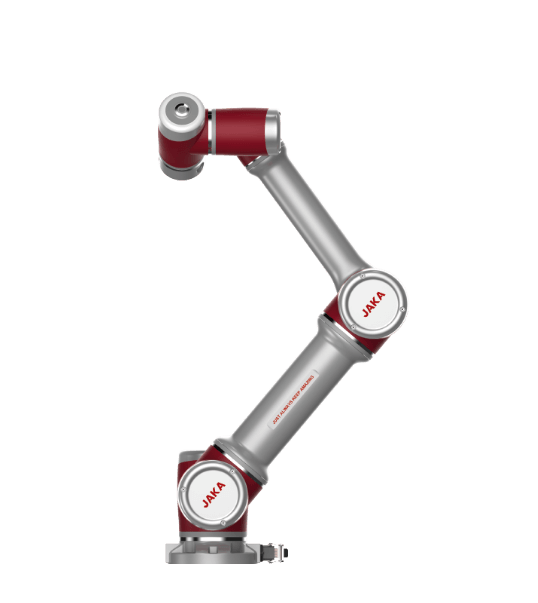
In the traditional manufacturing era, robots were defined by their isolation. They were massive, powerful, and stationary, confined behind steel fences because their high-speed movements posed a risk to human workers. However, as we enter 2026, the factory floor has become a space of partnership. The industrial collaborative robot, or cobot, has fundamentally redefined the relationship between humans and machines by allowing for a fenceless, shared workspace where safety and efficiency coexist.
An industrial collaborative robot is not just a “small robot”; it is a sophisticated system designed to assist, adapt, and act as a force multiplier for human expertise. In flexible production environments—where product designs change rapidly and batch sizes are smaller—these industrial collaborative robots perform a range of functions, from intricate assembly to heavy material handling, that traditional automation simply cannot handle with the same degree of agility.
1. Bridging the Gap in Machine Tending
One of the most common and vital functions of an industrial cobot is machine tending. This involves loading raw materials into machines (such as CNC mills, injection molding presses, or test stations) and unloading the finished parts.
In a flexible production line, the cobot serves as a consistent link that never suffers from fatigue. Unlike traditional robots, which require a fixed setup, a collaborative robot can be moved between different machines. If a CNC machine finishes its run in the morning, the cobot can be wheeled over to a laser engraver in the afternoon. This mobility ensures that expensive machinery remains operational 24/7, maximizing equipment effectiveness without requiring a permanent structural overhaul of the facility.
2. High-Precision Assembly and Screwdriving
In industries like electronics and automotive sub-assembly, the margin for error is nearly zero. Industrial collaborative robots excel at repetitive, high-precision tasks such as screwdriving, gluing, and delicate part insertion.
Equipped with advanced sensors, a cobot can apply the exact amount of torque required for a tiny screw or follow a complex path to apply adhesive with sub-millimeter accuracy. Because they work in the same space as humans, they often handle the “menial” parts of the assembly—holding a heavy component in place or driving dozens of screws—while the human operator focuses on complex wiring or quality inspection. This synergy creates a production rhythm that is faster, more accurate, and less prone to human error.
3. Palletizing and Material Handling in Tight Spaces
Logistics and packaging are the final frontiers of the factory floor. Cobots have become the go-to solution for end-of-line palletizing, especially in facilities where floor space is at a premium. Because they do not require bulky safety cages, they can be integrated directly into existing conveyor lines.
They are capable of recognizing different box sizes and weights, stacking them according to pre-programmed patterns. This prevents musculoskeletal injuries for human workers who would otherwise have to perform thousands of heavy lifts per shift. In flexible production, where packaging requirements can change with every order, the ability to quickly reprogram a palletizing pattern via a tablet or smartphone is a critical advantage.
4. Inspection and Quality Assurance
With the integration of AI and 2D/3D vision systems, cobots have evolved into active participants in quality control. An industrial cobot can be programmed to pick up a part and present it to a camera from multiple angles, or move a sensor over a surface to check for microscopic defects.
This function is particularly important in “high-mix” manufacturing. A vision-equipped cobot can identify which product model is currently on the line and adjust its inspection criteria accordingly. It ensures that every item leaving the factory meets the required standards, providing a level of data-driven oversight that manual inspection cannot match.
5. The Professional Standard: JAKA Pro Series for Harsh Environments
While the functions of a cobot are vast, many production environments—such as metal machining or chemical processing—are too harsh for standard collaborative robots. Dust, oil mist, and water can quickly degrade sensitive electronics. This is why a pro-grade solution like the JAKA Pro series is essential for true industrial reliability.
The JAKA Pro series bridges the gap between collaborative flexibility and industrial-grade durability. It is specifically engineered to perform all the key functions mentioned above—tending, assembly, and handling—under the most demanding conditions.
Why the JAKA Pro Series is Built for the Factory Floor
IP68 Protection: Unlike standard cobots with IP54 ratings, the JAKA Pro series is completely dust-tight and can withstand immersion in water or exposure to oil and shavings. This makes it the ideal industrial cobot for CNC machine tending and grinding applications.
Temperature Resilience: It remains fully operational in temperatures ranging from -10°C to +50°C, ensuring performance in unconditioned warehouses or high-heat manufacturing zones.
Precision and Speed: With a repeatability of ±0.02 mm , it provides the accuracy of a specialized assembly robot with the safety of a cobot.
Payload Flexibility: Available in various models (including the Pro 5, Pro 12, and the high-capacity Pro 16), it can handle weights from 5 kg to 16 kg, covering the majority of industrial handling tasks.
By utilizing the JAKA Pro series, manufacturers no longer have to choose between a robot that is “safe” and one that is “tough.” You get a high-performance partner that can be deployed at any angle, programmed in minutes through a graphical interface, and trusted to run for long time non-stop.
